
How many of your people would you rehire? (And what that says about your culture.)


John Nieuwenburg
John Nieuwenburg has been a professional business coach since 2004. Prior to becoming a coach, he held executive positions with Tip Top Tailors and BC Liquor Stores. In 2019, MacKay CEO Forums awarded him with Canada’s CEO Trusted Advisor Award in the Small Business category. Since becoming a coach, John has worked with over 400 clients, taking them through a systematic process that helps them feel organized, confident and in control of their businesses.
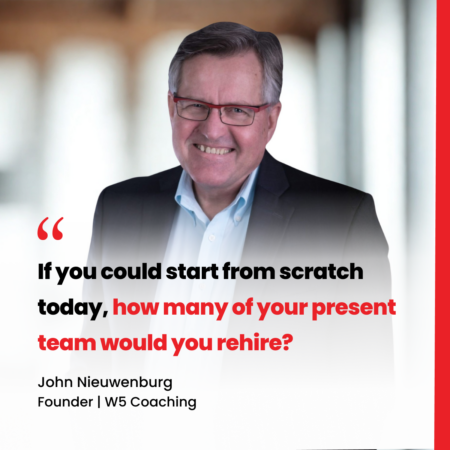
If you could start from scratch today, how many of your present team would you rehire?
Let me ask you a question I’ve put to a lot of business owners over the years.
If you could start from scratch today, how many of your present team would you rehire?
The most common answer I get is about half.
If you’re tolerating the less-than-great results of the bottom half, do you think the top half are wondering how come you put up with it?
How about your customers?
How do your customers feel about that bottom half?
And here’s the question that really matters: what would become possible for you if you could even get the bottom half up to the average of what you have today?
What would that mean for your business?
For your customers?
For your stress levels?
Would it be easier to go home at night?
The answer isn’t a hiring problem. It’s a culture problem.
Most owners, when they look at that “only half” answer, jump to the conclusion that they need to fire people and hire better ones.
And sometimes that’s true.
But if you don’t fix what’s underneath, you’ll end up in the same spot two years from now with a different cast of characters.
The thing underneath is culture.
Culture is the precursor of getting great results.
It’s not the byproduct.
It’s the initial thing you have to get in place.
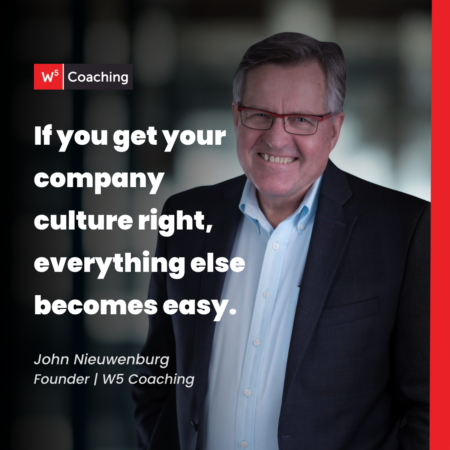
If you get the culture right, everything else becomes easy.
What the Stanley Cup teaches us about this
I’m in Canada, so bear with me on the hockey example.
The team that wins the Stanley Cup will almost certainly have the best culture.
They may not have the most talent, but they will have the best culture.
Take Sidney Crosby.
He’s won three Stanley Cups.
And he knew, the whole way through, that he could only go as far as the team together would work together to get the result.
That philosophy is ultimately what got him three Cups.
Now compare that to Alex Ovechkin.
For most of his career, his identity was wrapped up in being the guy who scored the most goals.
His value to the team, in his own mind, was scoring.
So he was more important than the team.
Getting those goals was more important than the team.
And then something happened around age 32.
He realized that if he actually wanted the Stanley Cup, he had to change his identity.
He had to become a different guy.
The thinking became: “I can only go as far as the team goes. I have to be a good team member. And if that means I only get 80 goals but we end up with the Stanley Cup, that’s a trade-off I’m more than happy to pay.”
The best team, the best result, the best outcome — it’s the team with the best culture. Every time.
You don’t get the culture you want. You get the culture you deserve.
Here’s the hard part for business owners.
If you’re not actively cultivating your culture, it’ll be a byproduct of what you put up with.
Because that’s how people know what the culture actually is.
Not by what’s written on your wall or your website, but by what gets tolerated.
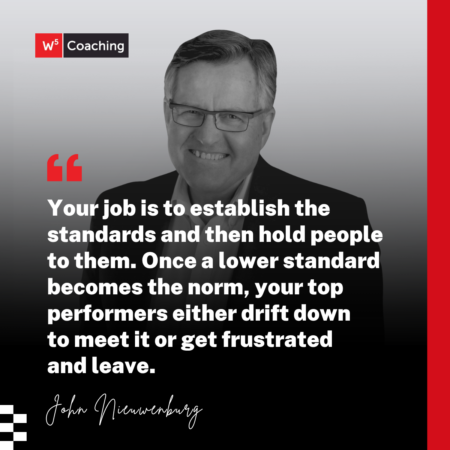
So, your job is to establish the standards and then hold people to them.
That bottom half of your team isn’t the bottom half because they’re bad people.
They’re the bottom half because somewhere along the way, the standard for what’s acceptable drifted.
And once a lower standard becomes the norm, your top performers either drift down to meet it or get frustrated and leave.
Either way, you lose.
What it looks like to actively cultivate culture
A few things that make the difference:
Write it down.
Your culture is a set of rules that guide behaviour, similar to the rules of a game.
I can teach someone to pass a puck, take a slap shot, skate forwards and backwards.
But if I don’t tell them the rules of hockey, they can’t play hockey.
The same is true with your team.
They can have all the skills they need, but they can’t play together unless they agree on a common set of rules.
Borrow from the best.
You don’t have to reinvent the wheel. Tony Hsieh’s Delivering Happiness is a great place to start.
He built Zappos around a customer service culture and published their 10 core values for anyone to learn from.
Don Miguel Ruiz’s The Four Agreements is another template that works well: be impeccable with your word, don’t take anything personally, don’t make assumptions, always do your best.
Simple, and powerful when a team actually lives by them.
Hold the line.
This is where most owners fall down.
Writing the standards is the easy part.
Holding people to them (especially the ones who get results but behave badly) is what separates owners who have the culture they want from owners who have the culture they deserve.
If you’d only rehire half your team today, the question isn’t really about the bottom half. It’s about you.
What standard have you established?
What are you tolerating?
What would your team say the actual culture is? (Based not on what you’ve said, but on what you’ve allowed?)
Get the culture right, and the people problem starts to solve itself.
The right people lean in.
The wrong people self-select out.
Your top half stops carrying the dead weight, your customers feel the difference, and going home at night gets a whole lot easier.
That’s the work.
And it’s worth doing.
Changing your company culture can be challenging. If you’d like some help making the transition, let’s talk about coaching. Book 15 minutes with John

Build a Self-Managing Company
How to build a business that runs smoothly, profitably, and (mostly) without you.
Feeling stressed out and overwhelmed with a business that is taking all your time - and not giving you enough in return?
Are you finding it challenging to hire the right team (and get them to do the right things)?
I wrote this little guide for you!
Enter your details below to receive your free copy!