
From Firefighter to Fire Marshal

How Owners Stop Saving the Day and Start Preventing the Fire
Most business owners don’t set out to become firefighters.
They start their business because they’re good at something.
They build momentum.
They hire a few people.
Revenue grows.
And then one day they wake up and realize they spend most of their time putting out fires.
- A client issue.
- A staff mistake.
- A cash flow crunch.
- A deal that needs rescuing.
They’re busy.
They’re needed.
They’re exhausted.
And quietly, they’re becoming the single point of failure in their own company.
If that’s you, this article isn’t about working harder.
It’s about changing roles.
The Small Business Environment Creates Firefighters
Small businesses move fast. Markets shift. Employees come and go. Customers expect more. Cash flow is uneven.
In that environment, urgency feels normal.
When something goes wrong, the owner jumps in.
- You fix it.
- You smooth it over.
- You make the payroll happen.
- You close the sale.
- You calm the customer.
And everyone says, “Thank goodness you were there.”
That feels like leadership.
It isn’t.
It’s dependency.
The Hidden Cost of Always Putting Out Fires
When you are always the one grabbing the hose, four things happen:
- Fires become normal.
- Your team waits for rescue.
- The system never improves.
- You stay stuck in the middle — the hub in a hub-and-spoke business.
I’ve written before about hub-and-spoke owners.
Everything flows through them.
- Every decision.
- Every approval.
- Every exception.
A business that constantly needs firefighting is badly designed.
That’s not an insult.
It’s a diagnosis.
Why Firefighting Is Addictive (Hint: It Feels Good!)
Let’s be honest.
Firefighting feels good.
- It feels urgent.
- It feels important.
- It feels heroic.
Prevention feels slower. Quieter. Less visible.
No one applauds the fire marshal because nothing burned down.
But if you want to create the kind of business that gives you the life you want (and time to enjoy it), you need to change identities.
From firefighter…
To fire marshal.
Firefighter vs. Fire Marshal
Same business. Different role.
The Firefighter:
- Responds to emergencies
- Fixes symptoms
- Is needed every day
- Measures success by activity
The Fire Marshal:
- Designs prevention systems
- Sets standards and rules
- Rarely intervenes directly
- Measures success by the absence of crises
Fire marshals don’t run toward flames.
- They inspect buildings.
- They enforce codes.
- They reduce risk.
- They install early warning systems.
The goal is fewer fires.
Most “fires” are not surprises. (And they’re preventable.)
They come from:
- Missing standards
- Unclear decision rights
- No written systems
- Poor delegation
- Weak accountability
- No KPIs or inspection routines
As I tell clients all the time:
Systems run the business.
People run the systems.
You lead the people.
If there’s constant chaos, it’s almost always a systems problem.
Not a people problem.
Fires are design failures.
Here’s how to fix them.
1. Stop Feeding the Fires
Before you install prevention, you have to stop reinforcing the old pattern.
Declare the Shift
Tell your team:
“I’m changing how I work. I won’t be jumping into every issue. We’re going to build systems so these problems stop repeating.”
Define What’s Actually an Emergency
Most businesses are operating without clear escalation rules, so everything feels urgent.
You need to decide:
- What truly qualifies as urgent?
- What can wait?
- Who decides?
Hint: true emergencies look like these:
- Safety risk
- Legal risk
- Major financial exposure
- Reputation risk
- Irreversible decision window
Require Thinking Before Escalation
Fire marshals are reachable. They’re not interruptible.
Establish a new rule:
No problem comes to you without:
- What happened
- Why it happened
- What they recommend
You don’t grab the hose.
You ask questions.
You shift from “How can I fix this?” to “How can this get fixed without me?”
2. Install Fire Codes
In this step, you move from reaction to system design.
Track the Fires
For 10 business days, log:
- What went wrong
- Who escalated it
- Why you were needed
You’re not fixing yet.
You’re diagnosing patterns.
In most cases, 70–80% of issues are repeat offenders.
That’s where leverage lives.
Identify the Missing Codes
Ask:
- Was there a written standard?
- Was the expectation clear?
- Was there a KPI attached?
- Was it inspected?
If it’s not written, it doesn’t exist.
Decide Decision Rights
If people don’t know what they own, they escalate everything.
Clarify:
- What they can decide
- What they must inform
- What requires approval
Write the Code
For each recurring fire:
- Who owns it
- What the standard is
- When escalation is appropriate
- How it’s reviewed
This is about creating clarity.
Replace Firefighting with Inspections
Fire marshals don’t sprint to sparks.
They conduct inspections.
As an owner, that means:
- Weekly KPI reviews
- Structured team meetings
- Clear performance expectations
- Regular accountability conversations
You don’t manage from behind your desk.
You inspect what you expect.
And you get the behaviour you reward.
3. Enforce Prevention

This is where many owners slip back.
- Pressure hits.
- Revenue dips.
- A client explodes.
And they dive back in.
If you reward heroics, you’ll get more fires.
Instead, shift from solving to asking:
- What do you recommend?
- What standard applies?
- What happens next time?
Your job becomes:
- Prevention design
- Code enforcement
- Talent development
- Risk reduction
That’s what leaders do.
What Will Feel Wrong (But Isn’t)
When you stop firefighting, you will feel:
- Slower
- Less busy
- Less important
That discomfort is withdrawal.
You’ve been addicted to urgency.
Now you’re building stability.
Remember: working IN the business feels urgent.
Working ON the business feels strategic.
Only one of those creates freedom.
Two Questions to Ask After Every Fire
When something burns, ask:
- What code was missing?
- What inspection failed?
Use the answers to improve your systems.
Those two questions move you from rescuer to architect.
The Goal: A Business That Doesn’t Need Rescuing
The purpose of a business is to give the owner the life they want.
You can’t do that if you are the emergency response unit.
Firefighters save the day.
Fire marshals make saving the day unnecessary.
If your business currently needs you to be a hero, that’s not a badge of honour.
It’s a signal that it’s time for you to change your role.
Ready to stop fighting fires and start building a business that runs without you? Book a complimentary 15-minute call to discuss coaching: book a call with John
Build a Self-Managing Company
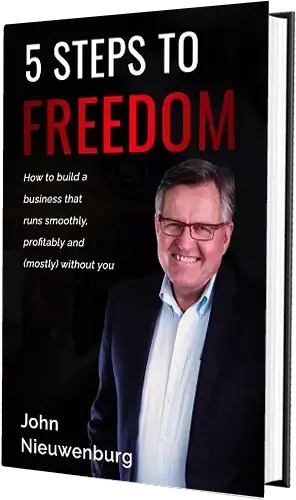
How to build a business that runs smoothly, profitably, and (mostly) without you.
Feeling stressed out and overwhelmed with a business that is taking all your time - and not giving you enough in return?
Are you finding it challenging to hire the right team (and get them to do the right things)?
I wrote this little guide for you!
Enter your details below to receive your free copy!