
Want Better Performance? Tell People Where They Stand.


People need to know if they’re on track.
That sounds almost too obvious to say out loud, but it’s something a lot of owners get wrong.
Your team members are working every day, making decisions, and putting in effort. And a surprising number of them have no real idea whether you think they’re doing well.
They’re guessing.
And when people guess about something that important, they tend to assume the worst.
When and how often do you give your team feedback?
For most owners, the honest answer is: rarely, and late.
When I ask owners how their people know where they stand, a lot of them point to the annual review.
Here’s the trouble with that. If you find yourself telling someone in their review that their work has been slipping since the spring, you’ve just admitted you watched it slip for half a year and said nothing.
You let them carry on in a direction you weren’t happy with, and now you’re handing it to them all at once, months too late to do anything about it.
That doesn’t help them get better. It puts them on the defensive, and it leaves them wondering what else you’ve been sitting on.
A review should hold no surprises. Not for you, and not for the person across the table. If something in it is news to either of you, the feedback should have come weeks or months ago.
Telling people where they stand is part of how you lead on a daily basis
Give people feedback in small doses.
A quick word after a meeting. A note in your daily huddle. “That went well.” “Here’s something I’d handle differently next time.”
None of it feels like a Big Conversation, and that’s exactly why it works.
You’re keeping people informed in close to real time, so they can adjust before anything builds up into a problem.
I’ve written before about the daily huddle and the team meeting rhythm, and this is part of why they matter so much.
They’re not just for tracking the numbers. They create the regular, low-stakes contact where this kind of feedback can happen naturally, as a normal part of the day rather than a special occasion you have to work up the nerve for.
Why owners avoid giving feedback
If telling people where they stand is this simple, why do so few owners actually do it?
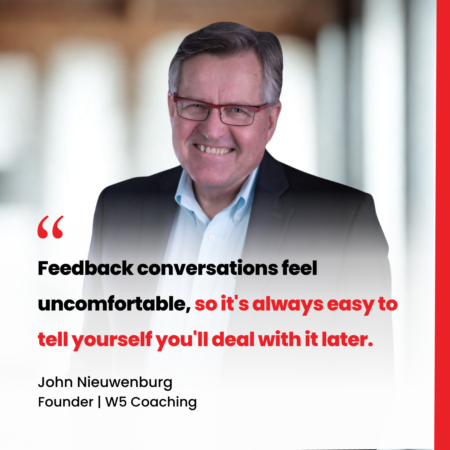
Because the small conversations feel uncomfortable, and it’s always easy to tell yourself you’ll deal with it later.
Someone misses a deadline and you let it slide because you don’t want to make a thing of it. They handle a client poorly and you decide it was a one-off. Each instance feels too small to be worth raising on its own.
But those instances don’t disappear. They accumulate.
The longer you wait, the bigger the conversation becomes, until what could have been a thirty-second course correction has turned into a confrontation neither of you wanted.
Staying quiet doesn’t make the issue go away. It makes it bigger, and it makes your team wonder whether you’ll ever say anything at all.
This is the same muscle behind every crucial conversation in your business. The owners who lead well aren’t the ones who manage to avoid the discomfort. They’re the ones who’ve decided to say the small things as they come up, before they grow into big ones.
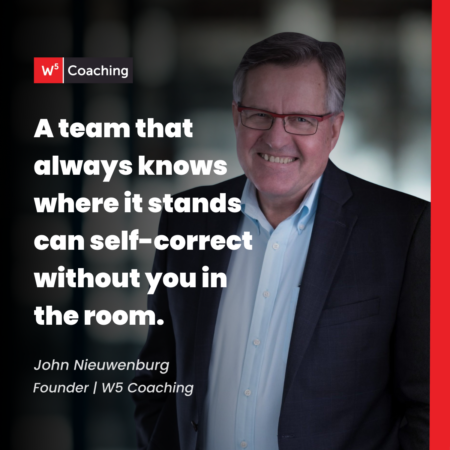
A team that always knows where it stands can self-correct without you in the room
They don’t have to wait to be told once a year whether they’re on track. They already know. And that frees you up to lead the business instead of refereeing it.
Better performance doesn’t come from a better review process or a cleverer form. It comes from a steady habit of telling people the truth. Kindly and often.
—
If you’d like some help building a rhythm of honest, ongoing feedback into how you lead – that’s something we can work on together. Book a call with John.
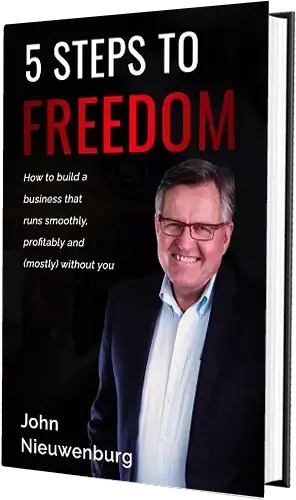
Build a Self-Managing Company
How to build a business that runs smoothly, profitably, and (mostly) without you.
Feeling stressed out and overwhelmed with a business that is taking all your time - and not giving you enough in return?
Are you finding it challenging to hire the right team (and get them to do the right things)?
I wrote this little guide for you!
Enter your details below to receive your free copy!