
The Owner’s Real Job: Build a Business That Runs Without You
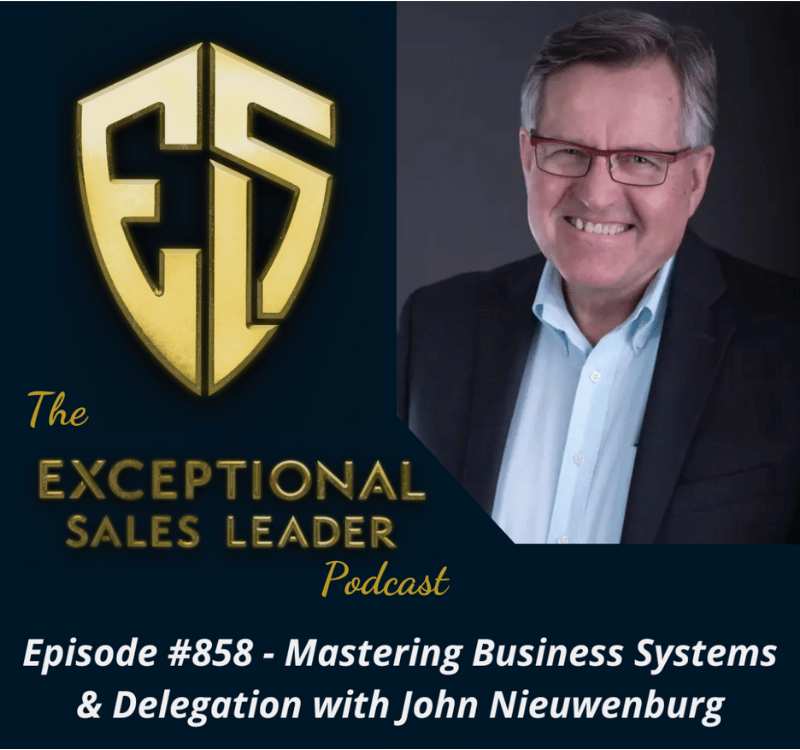

I was recently a guest on the Exceptional Sales Leader Podcast with Darren Mitchell, where the conversation quickly moved beyond sales and into a problem I see with almost every business owner I work with.
We talked about why owners get overloaded, why the business still depends on them for everything, and what actually has to change if the business is going to grow without consuming their life.
You can listen to the full episode below, or read the summary that follows.
Most business owners don’t start out trying to build a business.
They start out trying to do great work.
They’re great at a trade or a profession.
Electrician. Plumber. HVAC. Lawyer. Accountant. Health practitioner. Pick your lane.
And then one day they wake up and realize: being good at the work doesn’t mean you’re good at running a business.
That’s where the real frustration starts.
Clarity comes from asking better questions
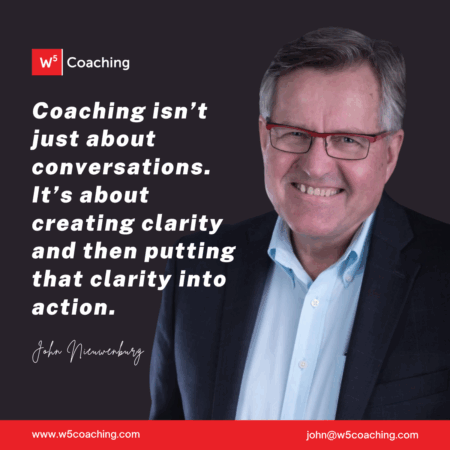
My coaching approach is simple: I use the Socratic method.
The best way to help someone is to help them figure it out for themselves.
That happens when you ask the right questions.
Most owners don’t need more advice.
They need clarity.
They need to see what’s really going on.
And they need a practical plan to fix it.
The three problems every owner faces
After working with roughly 450 clients, the pattern is consistent.
Owners come to me with problems that fall into three buckets:
- Time: “I’ve got too much to do. If I don’t do it, it won’t get done.”
- Team: Hiring is hard. Culture is fragile. Quality is inconsistent. People don’t perform the way you need.
- Money: You don’t have clean reporting. You don’t have a KPI dashboard. You want more sales and better marketing.
Different industries, same three complaints.
And there’s usually one core issue underneath all of it.
The real challenge: changing the owner’s role
Most owners are still acting like the technician.
It’s their name on the side of the truck, but they’re still the person on the tools.
Still the bottleneck.
Still the one everyone depends on.
If you want a business that scales, that has to change.
And here’s the truth most owners don’t want to hear:
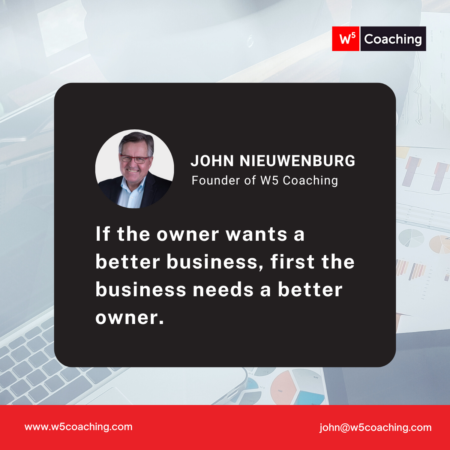
If the owner wants a better business, the business needs a better owner.
That doesn’t mean you’re broken.
It means you’ve outgrown the version of you that started the company.
You shouldn’t have to “make the fries”
Here’s an easy way to think about it.
How often is the owner of a McDonald’s required to be in the restaurant?
Very seldom.
Most of them don’t know how to make the fries.
And they don’t need to.
That’s the point.
A business can run without the owner doing the work, if the business is built properly.
Your goal is to move from technician-owner to operator-owner to leader-owner and eventually to investor-owner.
The three-legged stool of a self-managing business
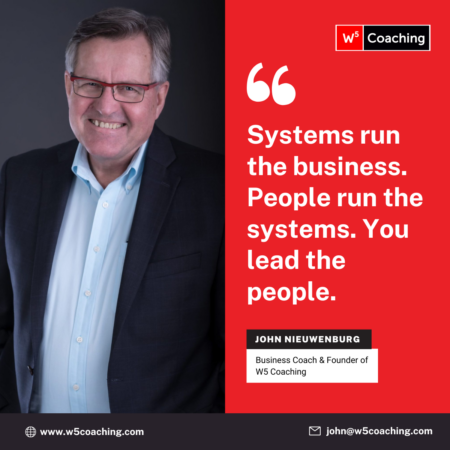
To get there, you need a three-legged stool.
Miss one leg and the whole thing tips over.
- Systems run the business
- People run the systems
- You lead the people
If people “run the business,” your results rise and fall on whoever happens to be working for you that month.
If systems run the business, you’ve got a backbone.
People can be trained.
If someone leaves, the business doesn’t collapse.
And the key point most owners miss is this:
Your product can be customized.
Your process must be systematized.
Even if every job is different, the way you deliver great work should be repeatable.
Delegation: the difference between control and growth
A lot of owners tell me they can’t delegate because they’ll lose control.
What they’re really describing isn’t delegation.
It’s abdication.
It means:
- The right level of authority
- The right level of responsibility
- The right level of coaching and supervision
Based on that person’s experience and judgment
Over time, done properly, you get someone to a “9 out of 10” level, where they’re handling it, and only coming to you when there’s an exception.
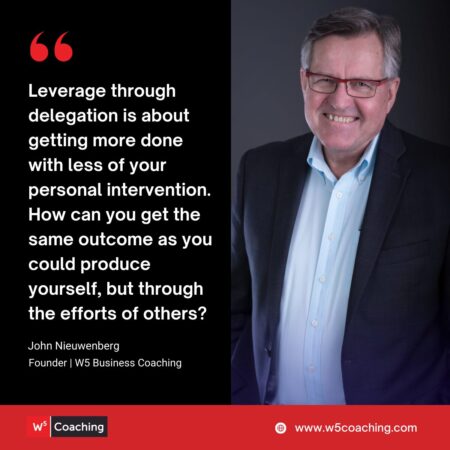
And if you don’t learn delegation, you’ll never get leverage.
Leverage is the key to success in business.
It’s doing more with less.
And one of the greatest forms of leverage is people.
Your “Oh Sh*t” list is your clue
Here’s a practical exercise.
Tell me what’s on your “Oh shit” list.
- Payroll.
- Receivables.
- Quotes.
- Scheduling.
- Chasing overdue accounts.
- Admin.
- Stuff you dread.
That reaction is a clue.
If every time you think about doing it you say, “Oh, sh*t I have to,” that work should be done by someone else.
You can teach that work to someone for $20 an hour.
And what does that give you back?
Your life.
Or at least the ability to spend your time doing work that’s worth $200, $300, $500 an hour, leadership, sales, strategy, growth.
Don’t write the SOP yourself
Most owners get this wrong.
They think, “I need to write SOPs.”
No.
Your job is to provide direction and expectations.
The person doing the work should write the SOP.
Why?
Because the act of writing it forces understanding.
It creates ownership.
And it becomes a standard you can train to, measure against, and improve.
Once it’s in writing, you don’t debate it anymore.
You have a contract for how work gets done.
Sales isn’t something you do to people
A lot of business owners have a negative belief about sales.
- Pushy.
- Salesy.
- Not trustworthy.
If that’s what you believe selling is, your subconscious will fight you every time you try to sell.
You won’t like who you are in the moment.
The shift is this:
Selling is something you do for someone, not to someone.
It’s service.
Your job is to help a buyer make the best decision in their best interest.
Not your agenda, their agenda.
When you see sales that way, selling becomes a gift.
The sale begins after the sale

Most people treat sales like a transaction.
But the businesses that win think in terms of relationships.
Here’s the difference:
- A customer is a transaction.
- A client is a relationship.
Which one do you want?
Trust comes from consistency, knowing what I can reasonably expect from you.
If your systems create a consistent experience, clients come back.
They refer others.
You stop having to “start over” every month chasing new work just to survive.
Recruiting beats “hiring in a panic”
Hiring in a rush is almost always a mistake.
Most owners hire when they’re under pressure:
- They’re desperate.
- They’re tired.
- They just need someone.
That’s when you make choices you shouldn’t.
- Before they need someone
- When they have options
- When they can be selective
Think like a sports team.
They recruit all the time, long before there’s an opening.
Here’s a simple challenge:
Name five people you’d like to hire if you could.
Then start building relationships.
If you do that, you have options.
You have leverage.
You’re not trapped keeping a poor performer because “you’ve got nothing else.”
Great salespeople balance empathy and drive
If you’re hiring salespeople, the best ones combine two traits:
- Empathy: they make people feel heard and understood.
- Ego drive: persistence, competitiveness, resilience, desire to achieve.
High drive with low empathy creates a trail of destruction.
High empathy with low drive creates great conversations and no results.
The best salespeople balance both.
Buying signals matter—lead the buyer
Good selling is paying attention.
The buyer will show you when they’re ready.
They lean in.
They ask different questions.
They start looking over the edge of the cliff.
At that point, they want leadership.
- “Should we talk about next steps?”
- “Should we talk about what this looks like?”
- “Do you want delivery today or tomorrow?”
That’s not pressure.
That’s guidance.
People want to be led, by someone they trust.
Name the real problem
A lot of owners think their problem is “I’m working 70 hours a week.”
That’s not the real problem.
The real problem is what it costs them.
Missing kids’ games.
No time with their partner.
Always thinking about the business.
Always carrying it.
Sometimes, the first gift in coaching is helping the owner finally say it out loud, clearly:
“I don’t want to pay this price anymore.”
That’s when change becomes possible.
What to take from this
If you’re stuck in the business, here’s the path:
- Build systems so the business stops relying on heroics
- Train people to run those systems
- Learn to lead through delegation, not abdication
- Treat selling as service and build client relationships
- Recruit before you need people
- Use AI to accelerate execution, but don’t pretend it replaces leadership
You don’t need more hours.
You need a better role.
And when the owner changes, the business changes with them.
If this resonates, book a free 15-minute call and we’ll see if coaching makes sense for you.
Get Your Time Back
How to escape overwhelm and gain time freedom in your business

Get control of your email and calendar
-
Prioritize your most important tasks
-
Become more productive than you ever thought possible

Ready to free up 5-7 hours per week? Download this guide today! Enter your details below to receive your free copy!